
#53: good sentences are free
poor people, rich people, Adelle Waldman

Dear Readers,
It’s the Boredom & the Horror & the Glory! Before I get into it, quick announcement about my new LUCY’S HOT TIPS 4 COLLEGE APPS newsletter. If you know a kid applying to college this year, tell them about this newsletter, because it is going to contain the hottest tips ever. Writing tips; we’re not getting too deep into the vagaries of college admissions themselves. This newsletter is about the sentence-level problems I always see on kids’ materials but that are never mentioned anywhere in the college admission industrial complex, online or off. We’re going to weed out those problems with this newsletter, and any college applying kid can take that all the way to the bank.
*
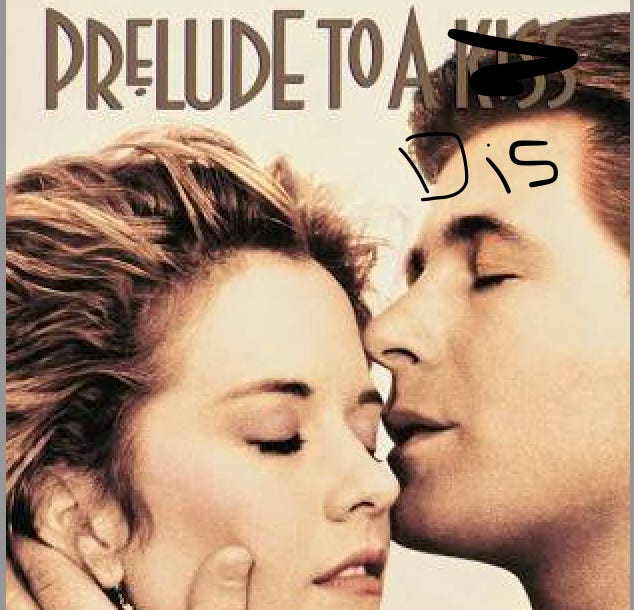
OK. Adelle Waldman. She is is really charming. I love that she worked at a Target to come up with an idea for her second novel, Help Wanted (2024), I love that she wrote a book entirely about Target workers in a poor Catskills town (Target is called Town Square in the book), love the decade-plus between her first book and her second, love that her first book, The Love Affairs of Nathaniel P. (2013), was a study of an inadequate Brooklyn man, told from his perspective, love the way she went all in on the Brooklyn thing, no holds barred. I was reading Sheli Heti interviewing her in Bookform, and Waldman says, “Help Wanted was in some ways riskier than The Love Affairs of Nathaniel P., although writing from the male perspective came with risks, too.” Love her risk taking! These are both risky novels, as Big Fivers go, all the more so for being directed at a big audience! If all this loving comes off as a Prelude to a Dis, that’s because it is, but my love of these qualities in Waldman and her work, and my respect for both of her books, is real.
Nathaniel P is really hard to stop reading—in fact I stayed up most of the night reading it—becasue of the attention Waldman gives Nate, to his every shade of thought and feeling. Nate is as flawed as your basic Henry James protagonist—which is to say, deeply, but he might come off as so flawed because of how intimate he is with his own heart and mind, and how intimately the novel renders these things. Of women—like, all women—, Nate muses,
They were happy to apply rational argument to defend what they already believed but unlikely to be swayed by it, not if it conflicted with inclination or, worse, intuition, not if it undercut a cherished opinion or nettled their self-esteem. So many times, when Nate had been arguing with a woman, a point was reached when it became clear that no argument would alter her thinking. Her position was one she ‘felt’ to be true; it was, as a result, impermeable.
I shook my damn head reading the acknowledgments at the end of the book, “feeling to be true” that many of the men Waldman thanks profusely for all their brilliant help with the book feel this way about women.
Here’s another part I loved, about the woman Nate is dating at the end of the book, who is, like Nate, a successful Brooklyn writer: “Her ignorance of things that had happened—certain illustrious sackings, schisms, famines, et cetera—was almost touching. She was equally unfamiliar with many books and ideas widely deemed to be of world-historical import.”
The charm, the humor, the Jamesian phrase “almost touching”: mwah!
OK, I’m actually still not ready to start dissing yet. Waldman writes beautifully about the novel’s setting. Like here, when Nate and his new girlfriend stand outside a bar while Hannah smokes—
It had been a chilly June; the outside air was cool. He and Hannah stood with their backs to the bar. Across the street, in a brighly lit bodega, a table was piled high with pineapples and bananas. Its back wall was lined with stacks of Nature’s Harvest toilet paper wrapped in bucolic green cellophane. Next to the bodega stood a shabby, glass-fronted insurance office.
Bucolic, ah! But she’s not saying something as simple as, oh this waste of plastic. It’s more like, here are these creatures in their setting, and this is the setting, where all these different Natures are piled together.
In Help Wanted, Waldman’s attention is much more diffuse. At the beginning of Help Wanted, she warns us that we’ll be bored, by providing a page-long list of all the items in the boxes of merchandise a character named Nicole is scanning. Some of these items appear on the list twice, like “a box of DVDs.” I don’t know if that means Nicole scanned two boxes of DVDs or if Waldman forgot she had already said that. I lean toward the latter—and I don’t like to think that—but kitty litter appears twice here, too, but the second time it’s “even more kitty litter.”
In the Bookforum interview, Waldman tells Heti that after Trump’s 2016 election, “the moral claims of the characters in Help Wanted came to feel more urgent to me, intellectually and aesthetically, than the kinds of problems of people like Nate and myself.” I think that’s beautiful. But it’s not borne out in the book itself, because the people of Help Wanted don’t receive the rich attention that Waldman gave Nate and his friends and lovers, either. You could say they don’t have time to think about the ridiculous things that Nate obsesses over, like the bagginess of his girlfriend’s jeans around the butt area when she gets up to go to the bathroom. But the pleasures of caring a lot about really stupid shit know no class or income boundaries, as anyone from Zora Neale Hurston to Matthew Desmond to Dorothy Allison to Harry Crews to V.S. Naipaul can tell us, and as some of us know from our own lives and experiences.
Unfortunately, the characters of Help Wanted are cartoons. Many of them are assigned, upon first mention, a race, sexual orientation, disability, and/or housing situation to adorn their low-class status, like those little charms people stick in the holes of their Crocs. Their romantic relationships, depicted with such precision in Nathaniel P., are rushed through in a couple pages, in a flurry of mental health challenges, prison stints, and job losses. When two characters argue, the assembled others look between them “like spectators as a tennis match.” Hair falls like a curtain. Three separate characters (Milo, Meredith, and Ruby) have the annoying habit of laughing at their own jokes. Val (a lesbian, only makes 17k a year, estranged from her father) refers the Leader on Duty position in the store as Loser on Duty. Those are the kinds of jokes these people make. Unlike Nate and his circle, they are not witty or intelligent. A long disquisition on how and why black Americans have been held back from the economic opportunities afforded to other groups, especially white people, Waldman gives to a former worker at the store, “a college student, studying American history down at New Paltz and only working at the store for the summer.” Why can’t a current, yearlong worker be the character that knows this?
I read something curious in a piece in The Cut where Waldman is chatting about Help Wanted with Emily Gould. Describing what living in Brooklyn was like for her before Nathaniel P. came out, she said, “I feel like I’d go to parties and I was just this quiet person in the back of the room. I had no M.F.A. from a fancy place or done any fancy jobs.”
I read the Cut piece before I read Help Wanted. And now that I’ve read the novel, I have decided I cannot accept this comment as an element of Waldman’s PR rounds for Help Wanted, a novel about the endless tedium and the one-step-forward-two-steps-back nature of lives spent in retail labor. Sorry, party comment rejected! Waldman’s characters in Help Wanted are people without GEDs, functional literacy, rides, healthcare, or homes. And here she is sounding like one of Nathanel P’s exes, making microscopic social distinctions between a masters in journalism from Columbia and a masters in creative writing from Columbia, between a New York Times and New Yorker byline (that’s my guess about what she means by jobs). I’m not saying I’m not attuned to these distinctions, or even that I’m not interested in them. I might even be able to drum up some sympathy for this story if I were hearing it under different circumstances (not a promise, just a possibility). But to share it while promoting this book seems a little, I don’t know, cruel. Ideally, you would want the writing of this book to bring your own life and those of your class peers into conversation with the reality of other peoples’ lives and the reality of their suffering. But there’s no conversation here. One one side of the world is the suffering of a rich person, with her shyness at parties, bearing the wrong Columbia writing masters degree, and on the other side, the suffering of poor people, exhausted and uneducated. But what would happen if Nate walked into the Town Square where all the characters of Help Wanted work? That’s not so far-fetched a thing to imagine.
Often Nate arose in my thoughts as I read Help Wanted. I was thinking, you gave better sentences to Nate. It is as if these people are so poor they can’t afford good sentences with which to be described or to describe things. This is so, so picky, but look:
“A small box filled with 2-ounce tubs of Astroglide personal lube rolled down the line. It was followed by a long procession of diapers: pull-ups, newborn-sized, organic, ones with Sesame Street characters, ones with princesses. One after another, they began rolling down the track.”
This is unlovely writing. “ones with…ones with..” then the very next sentence starts with “One…”? Why shorten lubricant to “lube” when you’re describing the product in such an otherwise clinical way (e.g., 2-ounce). The repetition of “rolled/rolling down,” not bothering to find a new verb, even after pulling out track as a synonym for line. I was thinking of the lavish attention Waldman paid Nate and his sentences, thinking of what Lady Bird’s teacher tells her: love and attention are the same thing.
A character in Help Wanted likes Potterstown, the fictional economically depressed Catskills town that hosts the Town Square store, because he “could drink a beer and look at the sky.” But there the paragraph, and our moment with him, end. We don’t see what he sees when he looks at the sky. Think of what we got to see of Brooklyn when Nate gazed across the street outside the bar!
Good sentences are free. It doesn’t cost any more money to write a book with them in it than it costs to write a book full of boring, confusing sentences. Everyone deserves good sentences, no matter how much money they have.
Sincerely,
Lucy
Speaking of good sentences:
“Many of them are assigned, upon first mention, a race, sexual orientation, disability, and/or housing situation to adorn their low-class status, like those little charms people stick in the holes of their Crocs.”
I had to pause in wonder after I read this analogy. Brilliant.