
#55: A Step Away From Them
in memory of Mel Nichols

Dear Readers:
The first time I ever went to D.C. was to visit my great old friend Ariel, who had been one year ahead of me in high school. Now she had graduated from college and was living as a grown-up, with a job and an apartment. We got drunk on 18th Street with her friends, who were even louder than I was, then we all walked to Dupont Circle and turned north Connecticut Avenue. I didn’t know the names of any of those places at the time, but I would later, during a quieter part of my life, come to know them well. I would come to love them and hate them with an intensity that was scary to me. Then, I didn’t need to listen to music on my headphones. I didn’t need a smartphone, even though lots of people were starting to have them. I didn’t need drugs and I didn’t need anything to drink. I could get all those kinds of highs combined walking around dirty Gallery Place, DuPont of course, always DuPont, distant and empty upper Massachusetts Ave., Shaw, Columbia Heights, up and down 18th, the Georgetown side of the Key Bridge, walking around thinking and feeling, thinking and feeling like the only person alive among all these people who were here for a reason.
But I was innocent of all that future when I visited Ariel in D.C. my senior year of college. By the time we got to DuPont, it was near midnight. We passed the bus-stop-like Starbucks on Connecticut, where the windows were always foggy, and we went to Kramerbooks, which was still open. It was as crowded as the pizza slice place we had come from on 18th. I bought The Collected Poems of Frank O’Hara, which I’d held and read and desired for months with private Proustian longing at Left Bank Books back in St. Louis. While I was in line to buy the Collected, I saw the little City Lights Lunch Poems and I bought that, too. Back out on the street, holding my treasures, I said, “They must stay open so late because people’s guards are down when they’re drunk and they buy more books!” Ariel’s friends thought that was really nerdy.
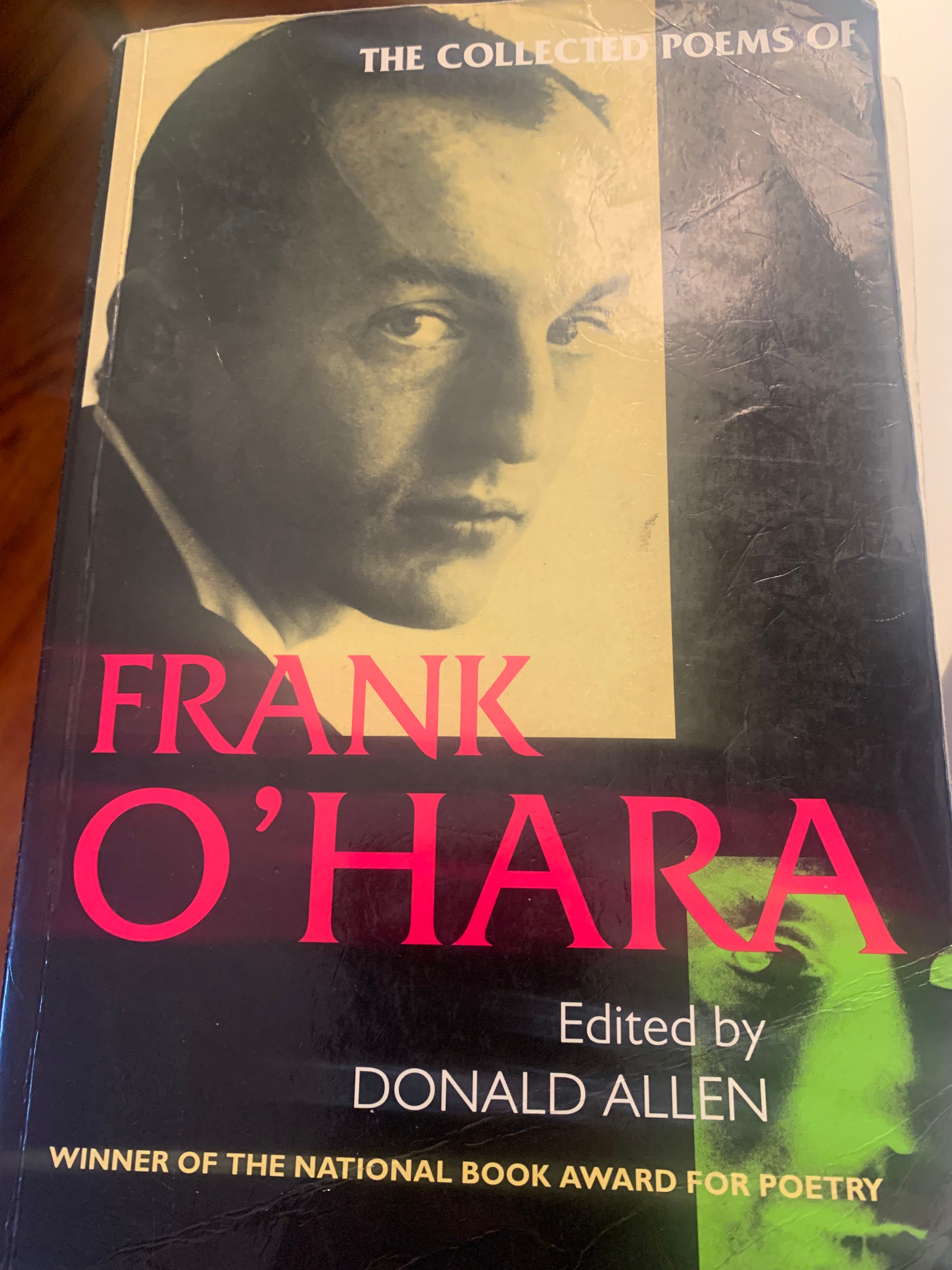
During the six years I lived in the D.C. area, I moved more than a dozen times. I lived first in DuPont, then Columbia Heights, then Arlington, then Fairfax, then Arlington again, then Fairfax again, many different places in Fairfax. The D.C. area, especially suburban Fairfax, a more suburban place than I’d ever been before in my entire life, might not seem like a place to be a poet. But it’s the best place to be a poet. No one knows you’re doing it, except other poets.
One night in Fairfax, at the Old Fire Station on University, several poets from the D.C. area came to read. This was maybe in 2009 or 2010, the days of foetry, flarf, Ron Silliman’s blog, of me being like 27. I remember that Chris Nealon read, and his poems were really funny—not just poetry funny, but actually funny. And then Mel Nichols read. She was cool and beautiful and glamorous, with long blond hair, a black coat, and jewelry dangling. She read from her book Catalytic Exteriorization Phenomenon, where most of the poems are called either “Day Poem” or “Bicycle Day.” I think she closed with “I Google Myself,” based on that song that goes when I think about you, I touch myself. She was part of the flarf movement, but she didn’t have any of flarf’s scupulous (and sorry, tedious) inscrutibility. Her poems swung back and forth between being beautiful and being funny, between making meaning and meaning nothing. While she was reading, I had this really strong feeling of wanting, almost needing to write, so excited at the thought of going home to write.
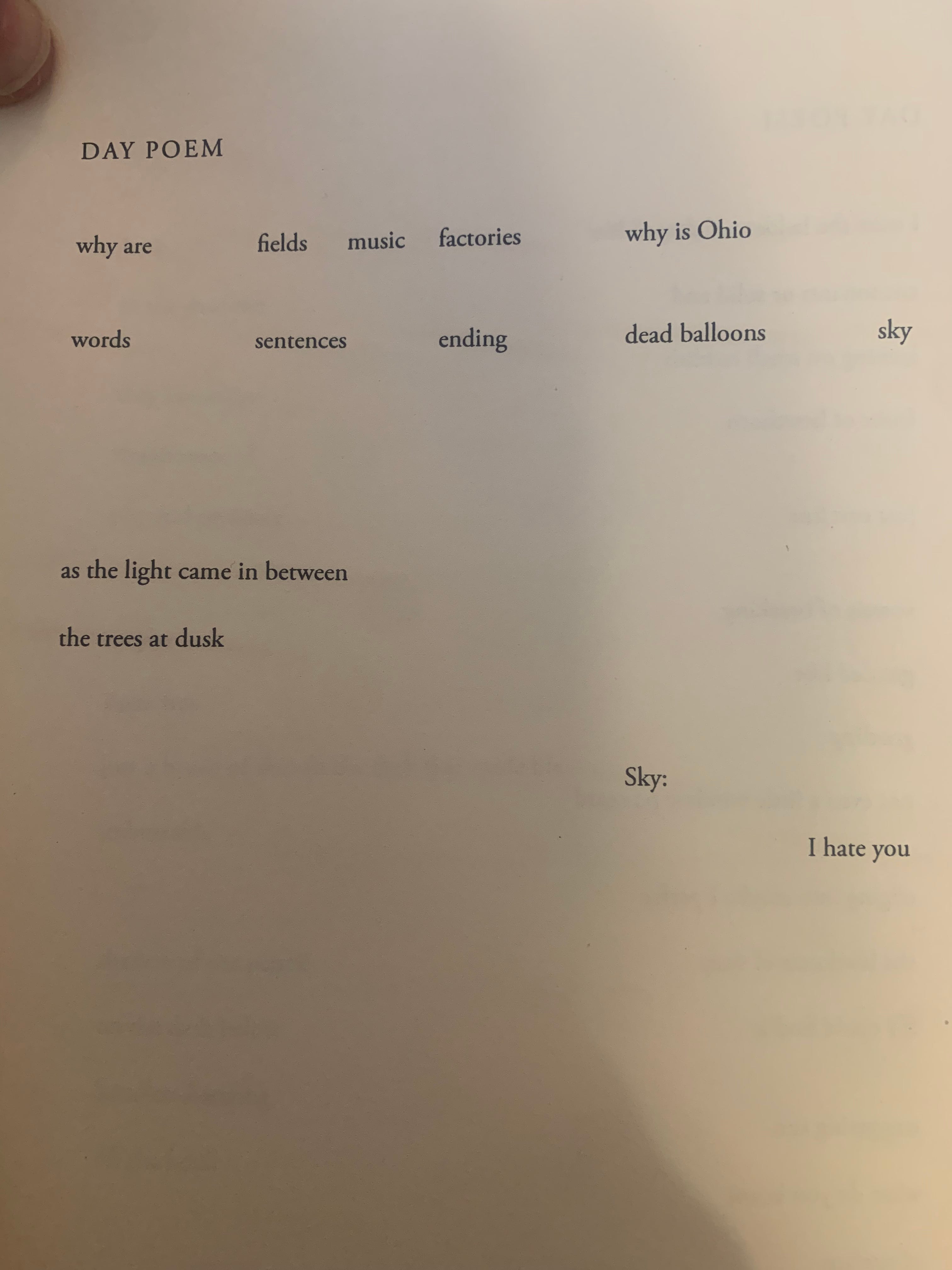
When I got Catalytic Exteriorization Phenomenon, I saw that the poems were written in single-line stanzas. Look at this “Day Poem”:
and can anyone tell what is wrong well
then let’s be really American and smash things up
or this one, so funny and nonsensical but the lyric keeps busting in (I had to take a picture of it in the book so you can see how it’s laid out, all the space for you to do whatever you want to do):
or this beginning of a “Bicycle Day”:
in the movies the dead don’t know they’re dead
they travel the loose clasp of broken stars
The way she wrote, it was like you could write your own poem in between the lines. An invitation. To me her life, her whole self and her writing and her being, was an invitation. So cool and glamorous, but not snooty or snobby—she was of D.C., the perfect place to be a poet.
And she wrote about the Internet, being online, in a way no one else knew how to. You can see it in “I Google Myself,” the automatic-ness of that poem interfering with its spots of humanness. “oh data / so sensitive / oh data,” she wrote; and: “we know so little about the world now / we need an interface to tell us.” “oh generosity of surveillance / removes tough stains.”
She wrote with and about curiosity, wonder, unknowing and not-knowing, but those qualities are usually light and airy in poems. In hers, they are aggressive, funny, weird.
I’ve always wanted to know how to yodel and
play the accordion and there was so much
you could have done to make me feel better
and you did
and I promptly forgot
When my great old friend Dan, D.C. poet, texted me to tell me that Mel had died—and she died last summer, I didn’t know—I thought of her for days. With nostalgia and gratitude, I thought of that time and place.
“I kiss you city,” wrote Mel,
and melt into your dangerous tongue
but I am looking at pictures
and you poke me in the eye
What her poems made me feel, the way they invited me to be, is a part of me.
Sincerely,
Lucy
omg, I was reading Silliman's Blog obsessively at the same time too! Never made it to DC, tho
Thank you for this memorial, Lucy. I've been returning in my mind to the passions/poses of my own time in MFAland (2007-9) and remembering with gratitude how it felt to be part of a chatty argumentative active community of readers and listeners. I wanna read a periodization of that era against the poetic moments that came before and after; what I recall in retrospect was that it really mattered (in workshops, over drinks, after readings) where you fell on the axis of Jorie Graham to James Tate: like, were you a broody lyric poet scuffing the surface of your reflection with Languagey moves, or were you a comic-creepy gigantist waving your arms at the nightmarish sublime? --Grateful too for the then-contemporary poets who've kept a hold on my heart; been re-reading Kate Greenstreet, Saskia Hamilton's first book, Blueberry Morningsnow. I didn't know Mel Nichols' writing but just ordered her book.